
Best Inverters for Home in India (2026)
Best Inverters for Home in India — researched and ranked on capacity, efficiency, backup, and build. 6 expert picks from ₹5,299 to ₹8,615.
We may earn a commission when you buy through links on this page, at no extra cost to you. We could also earn a fee through some links when you click on them. Learn more
The best home inverter in India is the Livguard Neugen 900VA Pure Sine Wave (₹5,299) — the most affordable unit here, with AI battery management that auto-detects your battery and tunes its charging, backed by a 3-year warranty. We researched and compared 6 pure sine wave options available on Amazon.in, scoring each on capacity, efficiency, backup, build, value. Whether you are setting up a new power backup system or replacing an old square-wave unit, this guide has you covered. An inverter is only half the equation — the battery determines actual backup hours. See our inverter battery roundup to find a 150Ah or 200Ah tall tubular that matches your inverter's VA rating.
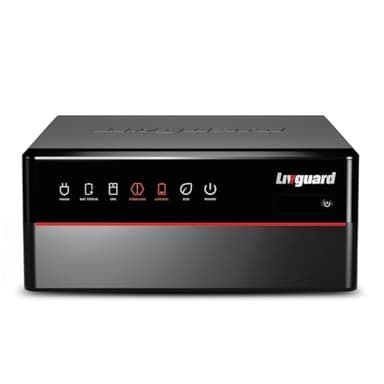
Livguard Neugen 900VA Pure Sine Wave Inverter with AI 12V
The Livguard Neugen pairs a 900VA/720W pure sine wave output with AI battery management that auto-detects your battery and tunes its charging, and at ₹5,299 it is the most affordable unit here while still carrying a 3-year warranty.
At a Glance
- #5
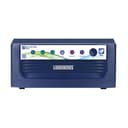 7.8Luminous Eco Volt Neo 1050 Pure Sine Wave Inverter 900VA/12VBest Features
₹6,249
₹6,249
Check Price

Detailed Reviews
Livguard Neugen 900VA Pure Sine Wave Inverter with AI 12V
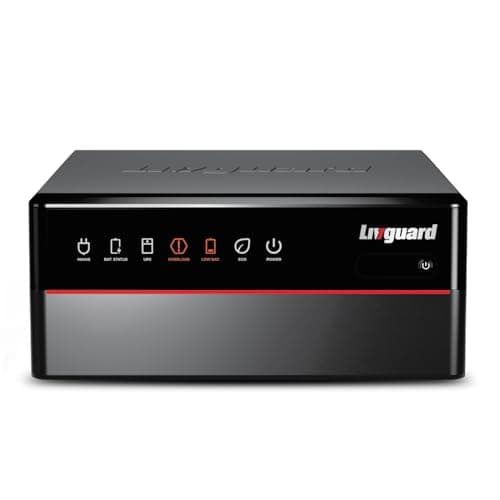
The Livguard Neugen is a 900VA/720W pure sine wave inverter whose headline feature is AI battery management that identifies the battery type and adapts charging to extend its life, backed by TurboCHARGE for faster top-ups. At ₹5,299 it is the cheapest unit in this lineup yet earns the top 8.3 score, which makes it a smart fit for a mid-size home that wants modern battery-care features without paying extra. The catch is that Livguard is a younger name than Luminous or Exide, so its long-term reliability record is still thin.
Pros
- +AI-based battery management auto-detects battery type and adjusts charging for optimal life
- +TurboCHARGE technology charges battery faster than standard inverters
- +backed by Livguard (Battery brand trusted by millions)
- +intelligent load management optimizes power delivery
- +modern design with comprehensive LED indicators
Cons
- -Livguard is newer brand compared to Luminous or Exide so long-term reliability data is limited
- -app monitoring features not fully developed yet
- -service network smaller than Luminous or V-Guard
- -some users report initial setup complexity
- -900VA same as basic models despite AI premium
Score Breakdown
Buy it if you want the smartest inverter of the group for the least money — the auto-adjusting AI charging is the real draw, just accept a service network smaller than Luminous or V-Guard.
Exide INVERTERZ Star 1125VA Pure Sine Wave Inverter 12V
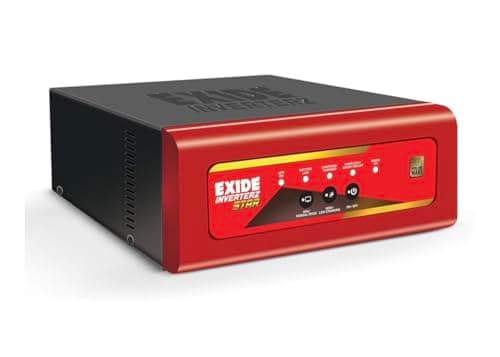
The Exide INVERTERZ Star delivers a beefier 1125VA/900W pure sine wave output than most of this list, with DSP circuitry that keeps voltage steady when the mains fluctuate. Backed by Exide (a battery name in India since 1947) and the longest warranty here at 42 months, it suits buyers who prize after-sales support and want headroom for a few more appliances. It sticks with a basic LED display, so you miss the detailed readouts of the LCD models.
Pros
- +Longest warranty in this segment at 42 months
- +Exide brand trusted since 1947 with excellent after-sales in India
- +DSP technology ensures stable power output even with fluctuating input voltage
- +1125VA capacity handles more loads than 900VA models
- +intelligent battery management extends battery life significantly
Cons
- -Basic LED display only
- -slightly higher price than Luminous Eco Volt at similar capacity
- -Exide inverters tend to be heavier than competitors
- -some users report fan noise at full load
- -limited smart features compared to newer Livguard AI models
Score Breakdown
Worth it if Exide's 42-month warranty and service reach matter more to you than a detailed display or the AI features on the Livguard.
Luminous Zelio+ 1100 Pure Sine Wave Inverter 900VA/12V
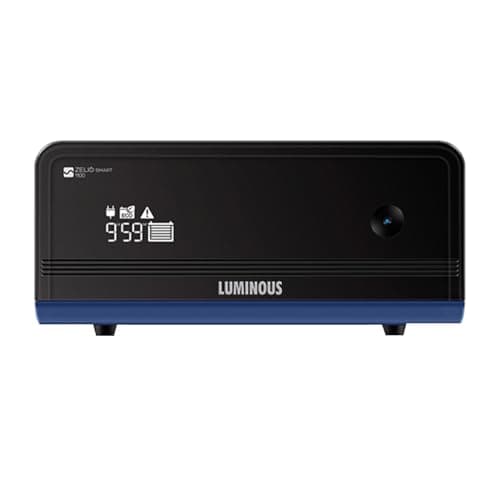
The Luminous Zelio+ is a 900VA/720W pure sine wave inverter from India's most widely used home-inverter brand, with an LCD that spells out battery status and faults plus a bypass mode for running straight off the mains. Its pure sine wave output is safe for sensitive gear like computers and LED TVs, and the 36-month warranty leads its class. At ₹6,958 it is one of the pricier 900VA options, and it will not comfortably run a large refrigerator alongside other loads.
Pros
- +India's most popular home inverter brand with outstanding reliability
- +LCD display shows battery status and faults clearly
- +pure sine wave output safe for all sensitive electronics including computers and LED TVs
- +quick charging reduces battery drain time
- +36-month warranty best in class
Cons
- -Battery not included (purchased separately)
- -900VA may not handle heavy loads like large refrigerators simultaneously
- -slightly higher price than entry-level square wave inverters
- -no built-in Wi-Fi or app connectivity
Score Breakdown
A dependable choice for a standard home setup thanks to the clear LCD and class-leading 36-month warranty, though its 900VA ceiling rules out heavy simultaneous loads.
Luminous Hercules 1500 Pure Sine Wave Inverter 1400VA/12V
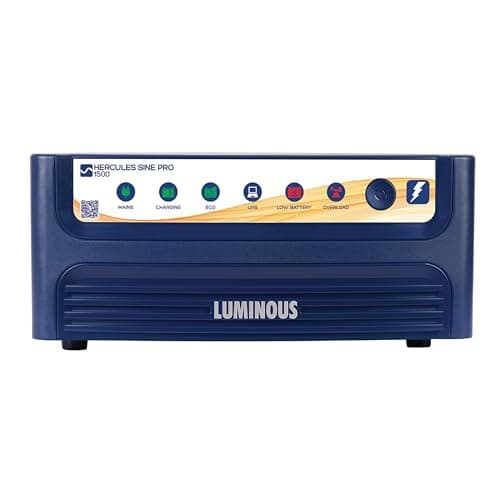
The Luminous Hercules 1500 is the muscle of this lineup, with a 1400VA/1120W pure sine wave output rated to run a refrigerator, multiple fans, a TV and lights at once. Its LVFC fast-charging keeps the battery topping up even where input voltage sags, which helps in rural and semi-urban areas, and a large LCD shows load and battery detail. At ₹8,615 it is the most expensive pick here and it needs a 100Ah-plus battery, so it is built for larger homes with heavier backup demands.
Pros
- +Handles the heaviest home loads — supports refrigerator
- +multiple fans
- +TV
- +and lights simultaneously
- +LVFC technology charges fast even at low input voltages (common in rural and semi-urban areas)
Cons
- -Most expensive in our list at Rs.8,499
- -only 24-month warranty (shorter than smaller models)
- -heavy and bulky — not suitable for small apartments
- -requires 100Ah+ battery for best performance
Score Breakdown
Choose it when you genuinely need to power heavy loads together, but note the shorter 24-month warranty and bulky body that make it a poor fit for a small apartment.
Luminous Eco Volt Neo 1050 Pure Sine Wave Inverter 900VA/12V
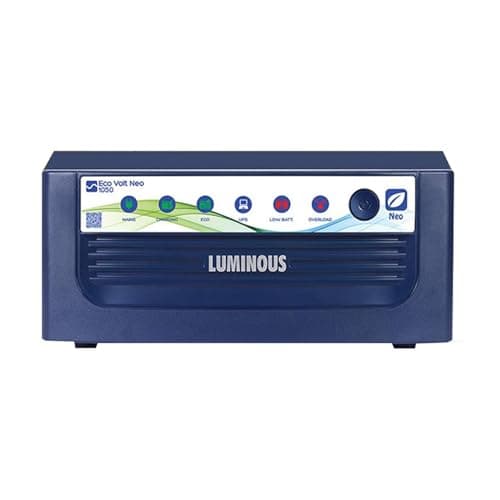
The Luminous Eco Volt Neo is Luminous's entry point into pure sine wave power, a compact 900VA/756W unit with an Eco Mode that trims energy use during light-load hours. Its lightweight body fits tight spaces and it still carries a 36-month warranty, which makes it a sensible pick for a smaller flat that wants clean power without spending up. You do drop to basic LED indicators rather than an LCD, and it won't run heavy appliances at the same time.
Pros
- +Most affordable pure sine wave inverter from Luminous at Rs.5,499
- +Eco Mode reduces energy consumption during low-load hours
- +pure sine wave output protects sensitive electronics
- +compact and lightweight design fits easily in tight spaces
Cons
- -Basic LED indicators only (no LCD display)
- -900VA capacity may not power heavy appliances simultaneously
- -no battery level display in percentage
- -lower build quality compared to Zelio+ series
- -fewer features than premium Luminous models
Score Breakdown
A reasonable choice for a modest home that values the energy-saving Eco Mode and low weight, as long as you can live without a detailed LCD readout or heavy-load capacity.
V-Guard Prime 1150 Pure Sine Wave Inverter 1000VA/12V

The V-Guard Prime 1150 is the value play of this roundup, giving you a 1000VA/800W pure sine wave output for ₹5,375 — the most capacity per rupee here. It works with flat plate, tubular and SMF batteries, adds a battery saver mode and a 3-year warranty, and its LED panel reports load percentage and battery status. It is a good match for a budget-minded home that still wants decent capacity, provided you can accept a bit more running noise than a Luminous.
Pros
- +Best price-per-VA ratio in this segment at Rs.6,399 for 1000VA
- +LED display shows load percentage and battery status
- +battery saver mode extends battery life
- +supports all three battery types (flat plate, tubular, SMF)
Cons
- -LED display less informative than LCD displays
- -slightly noisier than Luminous models
- -some users report slower charging in battery saver mode
- -no bypass switch for emergency mains use
- -V-Guard service quality can be inconsistent in smaller towns
Score Breakdown
Grab this one when stretching your rupees matters most — 1000VA for the lowest price here — but skip it if you need a bypass switch or count on strong service in a smaller town.
Comparison Table
| Feature | Livguard | Exide | Luminous | Luminous | Luminous |
|---|---|---|---|---|---|
| Price | ₹5,299 | ₹6,164 | ₹6,958 | ₹8,615 | ₹6,249 |
| Rating | 4.2/5 | 4/5 | 4.3/5 | 4.3/5 | 4.1/5 |
| Key Feature 1 | 900VA / 720W Pure Sine Wave Output | 1125VA / 900W Pure Sine Wave Output | 900VA / 720W Pure Sine Wave Output | 1400VA / 1120W Pure Sine Wave Output | 900VA / 756W Pure Sine Wave Output |
| Key Feature 2 | Artificial Intelligence Battery Management | Microcontroller Based Design | Compatible with 1 Battery (80Ah-220Ah) | Compatible with 1 Battery (100Ah-220Ah) | Compatible with 1 Battery (80Ah-200Ah) |
| Key Feature 3 | Smart Battery Compatibility Detection | Compatible with 1 Battery (80Ah-220Ah) | LCD Display with Battery Level Indicator | Large LCD Display with Load and Battery Info | LED Status Indicators |
How We Research & Rank
| Criterion | Weight | Based On |
|---|---|---|
| Capacity | 30 | VA rating (600VA–1500VA), supported load in watts, number of fans, lights, and appliances it can run simultaneously, overload handling capability, and suitability for Indian household power cut scenarios |
| Efficiency | 25 | Pure sine wave vs modified sine wave output quality, charging efficiency from mains, transfer time during power cut (milliseconds), voltage regulation accuracy (160V–280V input range), and idle power consumption |
| Backup | 20 | Compatible battery sizes (100Ah–200Ah+), actual backup hours with standard Indian loads (fans + lights + router), battery charging speed, and intelligent battery management for extended battery life |
| Build | 15 | Transformer quality, PCB and MOSFET grade, cooling fan noise and efficiency, LCD/LED display readability, battery water level indicator, and overall construction for Indian humidity and dust conditions |
| Value | 10 | Price relative to VA capacity, brand service network across Indian cities and towns, warranty terms on inverter and battery combo, installation support, and total cost of ownership including battery replacement |
Capacity is weighted highest because your inverter needs to handle your peak load during power cuts — an undersized inverter means overload shutdowns right when you need it most. Efficiency is second because it directly affects battery life and electricity bills.
Frequently Asked Questions
Add up the wattage of everything you want to run during a cut. For a 1BHK (3–4 fans, lights, a TV, a router) a 700–900VA inverter is enough. For a 2–3BHK that also backs up an inverter fridge, choose 1000–1450VA. Keep 20–30% headroom so the unit isn't constantly maxed out.
Pure sine wave for almost everyone. It delivers clean, grid-like power that's safe for fridges, computers, routers and modern TVs, and runs fans silently. Square wave units are cheaper but make fans hum, can slow motors and stress sensitive electronics. Only choose square wave for the most basic fans-and-lights backup on a tight budget.
Almost never. Home inverters are sold as the inverter unit only; you buy a compatible 12V battery separately (typically a 120–200Ah tall tubular or flat-plate battery). Budget for the battery — it often costs as much as or more than the inverter and is the part you'll replace every 3–5 years (longer with lithium).
Backup time depends on the battery, not the inverter. Roughly: backup hours ≈ (battery Ah × 12 × 0.8) ÷ your load in watts. For example, a 150Ah battery (~1440Wh usable) running a 300W load lasts about 4–5 hours. A bigger battery means longer backup; the inverter only sets the maximum load you can draw at once.
Changeover (transfer) time is how fast the inverter takes over when the grid fails. Most home UPS inverters switch in 10–20 milliseconds — quick enough that fans and lights don't flicker. Desktops without their own UPS may blink briefly. If you run a desktop PC or sensitive equipment, look for the lowest changeover time and consider a true online UPS for that device.